News Update: Monday, September 8 – Sunday, September 14

Global Shale Gas Development: Water Availability & Business Risks. WRI Report.

In a recently released report, the World Resources Institute (WRI) discusses some of the water-stress issues that shale-rich nations will face in the years ahead. Shale gas extraction — principally through a process called hydraulic fracturing — is highly water-intensive, the report notes, and furthermore, many of the world’s shale deposits are not located close to freshwater, and often compete with other industries, such as agriculture, for water use. According to WRI’s report:

  • 38 percent of shale resources are in areas that are either arid or under high to extremely high levels of water stress;
  • 19 percent are in areas of high or extremely high seasonal variability; and
  • 15 percent are in locations exposed to high or extremely high drought severity.

US has sufficient resources, technology to support over 54 GW of offshore wind. Electric Light & Power.

After a three-year investigation by a team of leading energy organziations and experts, the Department of Energy-funded “National Offshore Wind Energy Grid Interconnection Study” (NOWEGIS) was released recently, with encouraging results. The study examined the technical challenges and opportunities for high levels of offshore wind energy production along the U.S. coastlines. Among the study’s findings are:

  • The U.S. has sufficient offshore wind energy resources to consider having at least 54 GW of offshore wind. Although the NOWEGIS focused on the ability to integrate up to 54 GW of offshore wind into the U.S. grid by 2030, the study concluded that resources are available for significantly larger amounts of offshore wind.
  • Appropriate technologies exist for the interconnection of large amounts of wind energy to the U.S. grid. Multiple technologies for both high-voltage AC and high-voltage DC systems exist and can be used to bring offshore wind generated electricity to the onshore grid. Some technologies also might help alleviate troublesome congestion in the onshore system.
  • At a regional or national level, offshore wind energy might provide significant value. The NOWEGIS estimated that the 54 GW of offshore wind could reduce the national annual electricity production costs by some $7.68 billion, which corresponds to some $41 per megawatt-hour of offshore wind added to the grid. This savings can help justify the high initial investment costs.
  • Reductions in the federal permitting and siting process are critical for offshore wind deployment to achieve gigawatt-scale in the next decade.
  • Research and development promise to help reduce initial capital investment.

FERC Order 1000 drives changes in competitive landscape of transmission owners. Electric Light & Power.

According to a recent study released by Moody’s, FERC Order 1000 is making the electric transmission sector more competitive. One of the drivers has been the Order’s repeal of the Right of First Refusal, which allowed incumbent transmission owners the ability to be the first, and often the only, entity bidding for a transmission project. Eliminating this incumbent-favoring policy has opened up the market for more competition and, according to the report, many utilities are creating transmission-only (transcos) subsidiaries as a means to bid for new transmission projects and take advantage of higher FERC-regulated returns.

5 Key Proposals for New York’s Grid Transformation. Greentech Media

New York’s Public Service Commission has provided some of the first details of how it plans to transform the state’s electric grid and energy markets, with proposals to turn the state’s utilities into distributed system platform providers, identify use cases for replacing grid upgrades with distributed generation, and create open markets for third-party competition.

Those are some of the highlights of the straw proposal (PDF) for New York’s Reforming the Energy Vision (REV) initiative, released late last month. The 81-page report is the first big step in a process launched by Gov. Andrew Cuomo in April to create distribution grid planning, utility ratemaking and competitive energy markets that brings distributed energy resources to the forefront.

Opower Enters Rare Partnership With FirstFuel to Expand Into Commercial Building Efficiency. Greentech Media

Study Says Existing State Policies Can Be Used to Comply With Power Plant Rules. Bloomberg BNA – Energy & Climate Report

On September 11, Stanford University released a new report detailing 12 state clean energy policies that other states could adopt as means of achieving the carbon reductions that will be required when the EPA releases its final rule on existing power plants later this year. In June, the EPA issued a proposed rule which would set carbon emission limits in each state, pursuant to Clean Air Act section 111(d), a move that could reduce existing power plant carbon carbon dioxide emissions by 30 percent of 2005 levels by 2030. Under the proposed rule, states would be free to set whatever policies necessary to achieve the emissions reductions. The report released by Stanford University, “The State Clean Energy Cookbook: A Dozen Recipes for State Action on Energy Efficiency and Renewable Energy,” sets out numerous recommendations and policy suggestions that are already being implemented in other states.


News Update: Monday, September 1 – Sunday, September 7

So, getting back in the saddle again! Hopefully I’ll be able to get out more regular updates.

Monday, September 1 – Sunday, September 7

“Slow down on renewables!” pleads Austin Energy. “Don’t turn us into Germany!” SmartGridNews

The municipal utility, Austin Energy, is starting to voice concerns about increasing renewable electricity grid integration. According to local reporting, Austin Energy is becoming leery in response to the city council’s new renewable energy goals, which — as Germany has amply illustrated lately — could hoist higher rates on customers when the utility has to buy costly power from the statewide grid to supplement its own supply on cloudy or windless days. Concerns over the intermittent nature of renewable energy has been a hot topic, but this represents one of the first times that a progressive, renewable-friendly, utility like Austin Energy has started showing signs of slowing down.

NRG, Green Mountain team up to design ‘energy city of the future.’ E&E Energywire.

This week, NRG Energy Inc. and Green Mountain Power announced their partnership to undertake an extensive migrogrid laboratory to advance renewable energy use in Rutland, Vermont, and eventually the whole state. GMP will use NRG technologies and strategies to bring greater customer-choice and energy management to the city. According to GMP, the project’s goal is to move Rutland “beyond the legacy grid system” with a more distributed grid system based on NRG capabilities.

A Smarter Power Grid for U.S. Utilities. Bloomberg Business Week

Since 1984, power outages in the United States have risen more than 285%, costing the economy about $150 billion every year.

Rate Design For the Distribution Edge. Rocky Mountain Institute

Researchers at the Rocky Mountain Institute recently published a white paper detailing various ratemaking designs that could help the electric utility sector regain some of its vitality and reinvent its role in the modern electric industry.

U.S. solar installations have almost tripled in 3 years — study. GreenTechMedia

U.S. solar photovoltaic installations continued at a brisk pace in the second quarter of 2014, with 1,133 megawatts of new capacity coming online in the utility, commercial and residential sectors, according to data released Friday by the Solar Energy Industries Association and GTM Research. In a statement, SEIA President and CEO Rhone Resch said that currently “the solar industry employs 143,000 Americans and pumps nearly $15 billion a year into our economy. This remarkable growth is due in large part to smart and effective public policies, such as the solar Investment Tax Credit (ITC), net energy metering (NEM) and renewable portfolio standards (RPS).”


Oregon Natural Desert Association v. Jewell, No. 3:12-CV-00596, __ F. Supp. 2d __, 2013 WL 5101338 (D. Or. Sep. 11, 2013).

Reprinted with permission from the October 2013 Case Notes edition of the Oregon State Bar’s Environmental & Natural Resources Section.

These case summaries are prepared for the benefit for the full bar, and therefore provide more of an overview of the case and underlying laws than might otherwise be necessary for environmental law practitioners.  

Oregon Natural Desert Association v. Jewell, No. 3:12-CV-00596, __ F. Supp. 2d __, 2013 WL  5101338 (D. Or. Sep. 11, 2013). 
Adrienne Thompson, Judicial Clerk to the Hon. Jack L. Landau

Plaintiffs, the Oregon Natural Desert Association and the Audubon Society of Portland (collectively, “ONDA”) sued the U.S. Bureau of Land Management and Secretary of the Interior (collectively, “BLM”) alleging that BLM did not adequately comply with the National Environmental Policy Act (NEPA), 42 U.S.C. §§ 4321 et seq. when the agency granted a right-of-way for the North Steens 230-kv Transmission Line associated with the Echanis Wind Energy Project in eastern Oregon. ONDA argues that the agency’s Final Environmental Impact Statement (“FEIS”) and Record of Decision (“ROD”) should be overturned on account of, among other things, BLM’s failure to consider and mitigate the project’s impact on sage-grouse and golden eagle populations.
The Echanis Wind Energy Project is a 104MW wind farm being developed on the north side of Steens Mountain in southeastern Oregon. The project developer, Columbia Energy Partners, LLC, (“CEP”) signed a longer-term power purchase agreement to deliver the project’s power output to Southern California Edison customers. To bring this power to market, however, will require a 44-mile, 230-kV transmission line, 12 miles of which would run through BLM-administered land. CEP applied for this 12-mile right-of-way back in 2008, initiating a multi-year NEPA analysis that concluded with the agency’s FEIS and ROD that granted CEP’s application, and ultimately prompted ONDA to bring the present litigation in the U.S. District Court of Oregon.

NEPA is a procedural statute that requires federal agencies to prepare an Environmental Impact Statement (EIS) whenever they undertake any “major federal action[] significantly affecting the quality of the human environment,” 42 U.S.C. § 4332(C). So long as an agency takes a “hard look” at the environmental effects of its actions, Marsh v. Or. Natural Res. Council, 490 U.S. 360, 374 (1989), no particular substantive result is required by the statute.

ONDA’s concerns revolve around the important and high-quality sage-grouse and golden eagle habitats in and around Steens Mountain that could be threatened by the Echanis Project and the associated new transmission line. ONDA challenged BLM’s FEIS and ROD under the Administrative Procedure Act, 5 U.S.C. 701-708. CEP and Harney County intervened in support of BLM. All parties moved for summary judgment. In support of its motion and its overarching argument that BLM failed to comply with NEPA, ONDA claimed in particular that:

  1. BLM failed to consider the impact of the project on fragmentation and connectivity of sage-grouse habitat.
  2. BLM failed to follow its own policies relating to sage-grouse and golden eagles.
  3. The FEIS contained inadequate information about the impacts of the project on sage-grouse and golden eagles.
  4. BLM failed to consider and respond to other agencies’ critical comments.
  5. BLM failed to specify required mitigation measures and relied on the assumption that Harney County would require mitigation for the impacts to private land.
  6. BLM failed to analyze the effectiveness of the proposed mitigation measures.
  7. BLM failed to allow public comment on the wholesale changes it made between the Draft and Final EIS.
The court denied ONDA’s motion for summary judgment, rejecting the organization’s arguments on each of the seven issues raised in its motion. On the first issue, the court found that BLM adequately considered the project’s impacts on fragmentation and connectivity. On the second issue, the court found that BLM did not act arbitrarily and capriciously in following its own policies. On the third and fourth issues, the court found that BLM’s surveys and data were adequate, and that the agency sufficiently considered and responded to other agency comments. The court also found that BLM was not required to specify mitigation obligations for the project developer, but instead, was permitted to rely on Harney County’s imposed mitigation measures–measures that the court additionally found BLM to have sufficiently assessed. Lastly, the court found that BLM was not required to solicit public comment on its FEIS.
As a result, the court found that BLM’s decision to issue its FEIS and ROD was not arbitrary and capricious, and granted the motions for summary judgment raised by BLM, CEP, and Harney County.


News

News Roundup for the Week of
Monday, September 16 – Sunday, September 22

Carbon limits: Obama’s EPA sets terms for tomorrow’s cleaner energy industry.

The Guardian. An opinion piece that discusses EPA’s new carbon emission regulations for new power plants under the Clean Air Act. To Read EPA Administrator Gina McCarthy’s prepared comments on climate change and the new CAA standards, click here.

Oregon’s energy hub on the Willamette River a catastrophic risk when a megaquake hits.

The Oregonian. A state report warns of that catastrophe and more — including pipe breaks that could cripple Portland International Airport and create a statewide gasoline shortage. The report pinpoints the “critical infrastructure energy hub” between Sauvie Island and the Fremont Bridge crammed with tank farms, transmission towers, bridges, pipelines and electrical substations. The hub is a six-mile stretch near downtown Portland that could become Oregon’s Achilles heel when the Big One comes.

Wind Project Wins in Court But Delay is Costly

Capital Press. Environmental groups have failed to block a power transmission line that enables the construction of a major wind energy project in eastern Oregon. However, economic shifts in the energy industry are now posing another threat to the project, backers say. While litigation has delayed the project, natural gas has become cheaper due to new extraction technology…

More FERC uproar: Nominee for chairman stirs controversy

Smart Grid News. Ron Binz is the former chairman of the Colorado Public Utilities Commission. his nomination as FERC chairman has brought out vocal supporters and detractors….

ViZn Energy Systems Launches Large Scale Flow Battery for Micro-Grid Market

Green Energy News. The Z20 160 kWh battery offers a scalable storage system for the growing micro-grid markets and renewable integration. With more than fifteen years of research and intense product development cycles behind it, ViZn’s patented flow-battery technology breaks the cost/benefit threshold that is currently limiting widespread adoption of storage…

More Wind Means Less Baseload Generation

GreenTech Media. In a big chunk of the country, the rise of wind power is reducing the need for baseload generation from coal and nuclear…

What Lies Ahead for Utilities?

What Lies Ahead for Utilities?

For decades, U.S. electric utilities have enjoyed monopolies over their service areas and customer bases. In the coming years, however, a host of destabilizing realities will prompt the utility industry and policymakers to reconsider the utility’s role in the 21st century energy economy. As these challenges mount, currently-captive ratepayers will soon be able to drastically reduce their consumption, and perhaps one day disconnect from the utility entirely — precipitating what some have christened, the “utility death spiral.” How utilities will remain operational, and solvent, in this brave new world, is the topic of this and the next few series of posts.

The current Investor-owned utility business and regulatory structure

Although often colloquially and collectively referred to as “utilities,” investor-owned utilities (IOUs) are actually much different than their municipal utility and rural cooperative counterparts. First, IOUs currently claim a larger market-share of electricity customers: about 68%, as compared to 14.6% for municipal utilities, and 12% for rural cooperatives. Second, while municipal utilities and rural electric cooperatives are largely allowed to self-regulate (except for federal regulatory oversight in the wholesale marketplace), IOUs are principally regulated by their respective state’s public utility commission (PUC). IOU revenue is determined by a PUC-approved calculation that amortizes the cost of utility assets and a reasonable rate of return across all the utility’s ratepayers over a period of years. Under this ratemaking model, IOUs are incentivized to build large generation units and keep the meters turning.

Current policy and market trends are shaking this model to its core. On a macro level, political and societal concerns over climate change are forcing all utilities to invest in more renewable energy sources, energy efficiency programs, and prompting stricter emissions regulations that are shuttering many fossil burning generators. On a micro level, customers are calling for more integration of distributed energy resources (DERs) and demand-side management (DSM)—disruptive challenges that will effectively reduce IOU “market share” and lower their revenues under the current regulatory model. The following paragraphs will look at some of these factors, and future posts will discuss how utilities are responding — and should respond — to remain relevant in the future energy economy.

Destabilizing forces affecting the IOU business model

A. Energy Demand

Population growth, slow-but-steady economic growth, and PV implementation are three positive factors that will drive up electricity demand. However, this rise will be counterbalanced by higher electricity prices (owing in part to tighter environmental regulations), efficiency policies, and smart meter (or even, microgrid) policies.[1] In the end, the EIA projects that electricity demand will decline 6 percent from now through 2040, and coal’s market share of electricity generation will decline to 35 percent.The EIA report does not take into account anticipated or pending policies (only fully implemented legislation), so these may be conservative estimates.

B. Energy Efficiency

Energy efficiency (EE) programs and investments will continue to impact utility load and cut into their sales. One DOE study estimates that with current electricity price trends, customer objectives, and various other policy incentives, EE program spending could rise 300 percent by 2025—from today’s $6 billion per year to $16 billion. Under the current rate structure, utilities will have to raise their rates to make up for this lost revenue, which in turn could prompt customers to either reduce their consumption further, or off-set it through DER.

C. Distributed Energy Resources (DER), Demand-Side Management (DSM), and Smart meters

The renewable distributed energy resource (DER) with the most near-term potential is solar photovoltaic (PV) panels. Solar PV installments totaled 3,313 MW in 2012, a 76% increase from the year prior. The utility sector grew the most (54%, or 1,782MW), followed by non-residential installments (more than 1000MW, or about 30%), and the residential sector, which installed about 524MW, or roughly 16% of the total. For next year, the Solar Energy Industries Association forecasts an additional 4,300MW of new PV (a 29% increase from 2012), and 946MW of concentrating solar power. The top ten states contributing toward the 2012 solar PV deployment were: California (1032.7 MW of installed generation), Arizona (710.3MW), New Jersey (414.9MW), Nevada (198 MW), North Carolina (131.9 MW), Massachusetts (128.9MW), Hawaii (108.7 MW), Maryland (74.3MW), Colorado (69.9MW), Texas (64.1MW). Bloomberg New Energy Finance anticipates a 22% compound annual growth rate in PV installations through 2020, which will result in 30 GW of total PV capacity, 4.5GW of which from distributed PV. Solar PV is expected to reach grid parity with little-to-no government subsidy assistance by 2017. Wind energy technology is also decreasing in price. Demand-side generation has become more popular thanks to net-metering statutes (implemented by over 40 states) and state and federal incentive programs.

The implementation of smart grid technology—especially smart meters—is on the rise. Thanks in large part to federal stimulus funding, to date, nearly 35 million meters have already been deployed across the United States, and 15 million more are projected to be installed by the end of 2013. However, utilities are just now starting to implement some of the key features enabled by smart meters, such as: outage management, voltage optimization, load planning and revenue protection.

In the absence of innovative policymaking and ratemaking restructuring, increased DER and DSM will negatively affect utilities’ bottom-line. Although current nationwide electricity load that is lost to DER is only at one percent,[ii] as more smart technology is deployed, and as other DER become more cost competitive this market share will increase and utilities will have to raise their rates to compensate.[iii] In addition, as smart grids begin to realize their full functionality potential, this will also allow customers to tailor and reduce their consumption, further cutting into IOU revenue streams.

D. Net Metering

Net metering programs allow electricity customers to offset their electricity bills through supplying their consumption via small on-site distributed sources and selling excess electricity back to their utility. Clean energy advocates champion netmetering policies for their promotion of distributed generation technologies, contributions toward state renewable portfolio standards (RPS), reductions of greenhouse gas emissions, and facilitation of in-state job creation and economic development.

Currently, 44 states and the District of Columbia have net metering laws. The following states do not have official net metering laws (although some individual utilities have their own net metering policies): Alabama, Idaho, Mississippi, South Dakota, Tennessee, and Texas. These laws are praised by renewable energy advocates (especially solar PV proponents) for increasing distributed generation (DG) deployment and empowering consumers. Although DG only currently displaces about one percent of total U.S. electricity load, this market share is increasing quickly. Indeed, 99% of U.S. solar PV installations in 2012 were net metered, representing 1.5 GW of capacity added to the grid.

Net Metering laws pose an impediment to the traditional utility revenue stream. Under this model, every kilowatt that a customer generates and consumes, is one less kilowatt that the utility sells—and profits from. In an effort to preserve their business model, many utilities have been pushing back on net metering laws by encouraging state legislatures to restrict the capacity of net-metered facilities or allow for increased “convenience” charges on net metering customers.

E. The Microgrid

The term “Microgrid” has been defined differently over the years. One of the most cited definitions comes from the DOE’s Microgrid Exchange Group (MEG). According to the MEG, a microgrid consists of “[i]nterconnected loads and distributed energy resources within clearly defined electrical boundaries that act as a single controllable entity… A microgrid can connect and disconnect from the grid to enable it to operate in both grid-connected or island mode.”[i] Microgrids present tremendous opportunities for DER and DSM integration, and they also pose a competitive threat to the utility business model. Microgrids are already commonplace in many developing countries such as in Haiti, Africa, and Brazil, where some communities are isolated from larger transmission systems. In addition, islands have made use of microgrid technology, for instance, El Hierro, a Spanish Canary Island off the coast of Africa, runs completely on a microgrid connected to various wind, solar, and pumped hydro storage resources. The Portuguese island of Graciosa is expected to generate 65% of its load through a renewables-power microgrid by the end of 2013. One research and consulting firm, Navigant Research, has identified over four hundred projects in development worldwide, and projects that microgrid investments will increase from $10 billion annually in 2013 to $40 billion by 2020.

1. Microgrids in the United States

Microgrid development is taking off in the United States as well. The CEO of Horizon Energy, a micogrid development company, recently told Fortnightly magazine that the company sees nearly 24,000 potential microgrid sites across the U.S., 300 of which could be completed by 2015. Several microgrids are complete or under development in the United States. Among some of the first and consistent microgrid developers were universities like: University of California-San Diego (42 MW generation capacity), New York University at Washington Square (13.4 MW), Utica College (3.6 MW), and Cornell University, which spent $60 million to construct a 37 MW system.  The Illinois Institute of Technology is currently considering a $12 million microgrid system (i.e. a series of microgrids looped together for greater reliability).

Some federal agencies have also entered the microgrid market. The Food and Drug Administration’s White Oak research facility in Maryland recently finished a $71 million microgrid project.[vi] Just this year, the Department of Defense (DOD) completed a substantial grid-interconnected microgrid in its Fort Bliss army post in Texas, one in a series of microgrid development projects that started with its flagship 17 MW project at the National Interagency Biodefense Campus at Fort Detrick in Maryland. The DOD is fully embracing microgrid technology and recently joined forces with the Departments of Energy and Homeland Security to ensure that other military bases can function independently from the grid. The goal of the project, called SPIDERS (Smart Power Infrastructure Demonstration for Energy Reliability and Security), is to gradually implement microgrid technology through three, progressively complex, installations: first, Hickam Air Force Base, which was completed earlier this year, then Fort Carson in Colorado, then finally Camp Smith back in Hawaii.[viii]

As recently discussed here, Connecticut is the first state to promote microgrid policies. In June 2012 the Connecticut General Assembly created the microgrid pilot program in which $20 million was allocated to the state Department of Energy and Environmental Protection in order to develop and test dozens of small microgids, and bring some of them operational by the end of 2013. On Wednesday, July 24, 2013, state officials announced that nine microgrid projects were approved to receive a cumulative $18 million in funding. The projects chosen include certain universities, hospitals, a submarine base, as well as various discrete residential and commercial mixed-use communities. The microgrids will be designed to independently provide power to these critical facilities and town centers on a 24-7 basis, without needing to connect to the larger grid. Governor Malloy has allocated an additional $30 million over the course of the next two years to continue funding other microgrid projects throughout the state. Any additional costs for the microgrids will be borne by all ratepayers, and utilities will be allowed to recover any costs incurred for overall grid maintenance.[xi] Future funding solutions will likely be fettered out in the pilot process.

The only other states to have explored microgrid policies have been New York (which published a report on the current regulatory obstacles facing microgrid deployment in 2010), and California. Aside from the DOD project, Hawaii is also transitioning to microgrids and local generation in order to cut down on oil imports. In April 2013, a water-pumping and wind energy generating turbine finished construction on North Kohala. The developer, Gen-X Energy Development LLC, announced that it plans to replicate the project in other Hawaiian communities.

2. Challenges for Microgrid Implementation going forward

Microgrid developers are watching Connecticut’s experiment closely. Once technological hurdles are overcome, then regulators will have to grapple with some of the nitty-gritty regulatory issues involved with microgrid implementation, such as:

  • Funding: as utility customers reduce grid usage or leave entirely, how to ensure that remaining utility customers are not left paying for increased stranded operation and maintenance costs, which could drive more consumers away.
  • Ownership: whether efficiency and reliability require that microgrid resources be owned by the utility or by independent third parties.[iv]
  • Utility franchise laws: how independent third parties can access and/or operate the microgrid without intruding on state-granted utility franchises.[v]

For additional information on the current state of the IOU business and regulatory model, and the challenges facing these utilities, check out this GreenTechMedia podcast, as well as this report from the Center for American Progress. The second part of this two-part post will discuss how utilities are responding, and should respond, to remain solvent despite these growing market and technological changes.

Other (non-hyperlinked) resources:

[i] See, e.g., Peter Fox-Penner, Smart Power (2010), Chapter 6.

[ii] Edison Electric Institute, Disruptive Challenges: Financial Implications and Strategic Responses to a Changing Retail Electric Business 1 (Jan. 2013), available at www.eei.org/ourissues/finance/Documents/disruptivechallenges.pdf

[iii] Id. at 17.

[iv] See, e.g., Margarett Jolly, et al., Capturing Distributed Benefits, Fortnightly Magazine (August 2012) http://www.fortnightly.com/fortnightly/2012/08/capturing-distributed-benefits (arguing that Utilities should be able to own DG infrastructure because it “would allow for efficient and timely deployment of strategically-sited DG that operates at high levels of reliability during system peaks.”).

[v] See Sara C. Bronin & Paul R. McCary, Peaceful Coexistence, Pub. Util. Fortnightly 39, 41 (March 2013), http://www.murthalaw.com/files/mccary_peaceful_coexistence_3_2013.pdf

News Roundup for the Week of Monday, July 22 – Sunday, July 28

News Roundup for the Week of Monday, July 22 – Sunday, July 28

Edison Electric Institute (EEI) Urges Federal Energy Regulatory Commission …

The National Law Review

On June 6, 2013, the Edison Electric Institute (EEI) issued a white paper urging the Federal Energy Regulatory Commission (FERC) to reevaluate the method it uses to establish returns on equity (ROEs) for transmission investments. EEI urges FERC to reaffirm its commitment to transmission investment by making necessary adjustments in its approach to setting a just and reasonable ROE for transmission investment. EEI’s white paper is certain to be controversial, since customer groups have been arguing for lower ROEs for many months.

FERC approves changes in ancillary service sales, reporting

HydroWorld

FERC said its final rules (RM11-24) are to enhance the ability of ancillary services providers to compete for sale of services to public utility transmission providers. FERC said its final rules (RM11-24) are to enhance the ability of ancillary services providers to compete for sale of services to public utility transmission providers.

Innovation Leader: MISO Uses Real-Time Synchrophasor …

Sacramento Bee

MISO recently became one of the first grid operators across the country to utilize new synchrophasor technology in MISO’s Real-Time System Operations for grid monitoring and analysis.

Renewable energy transmission projects create tension among greens

High Country News (blog)

You’ve got your grid-oriented greens on the one hand, who believe that the only way to slow or reverse climate change is by attacking it on a large scale, with big wind farms, big solar plants and big power lines to ship it across long distances. And on the other, the grassroots groups who feel that sacrificing local ecosystems to fight climate change isn’t the answer.

BLM unveils preferred power line routes through Utah

Salt Lake Tribune

The BLM this week identified its preferred alignment for PacifiCorp’s proposed Gateway South transmission line, connecting Wyoming renewable energy sources to a future substation in Juab County. Earlier this month the BLM released a draft Environmental Impact Statement (EIS) on the right of way for the project. This line would move up to 1,500 megawatts more than 400 miles from the planned Aeolus Substation in south central Wyoming to the planned Clover Substation near Mona.

NARUC Says FERC Rules Unfairly Snub State Authority

Law360

The National Association of Regulatory Utility Commissioners approved a resolution Wednesday strongly criticizing the Federal Energy Regulatory Commission, saying the agency’s implementation of a rule governing transmission planning “inappropriately infringes” on states’ authority over the electric grid.

Unneeded Power Line Would Scar New Hampshire

Hartford Courant

The Northern Pass Transmission Project — a proposed $1.4 billion electricity transmission project that would bring 1,200 megawatts of energy from Hydro-Quebec’s hydroelectric plants in Canada to southern New England — is one of the hottest issues this summer here in New Hampshire.

The five most important names in renewable energy that you’ve never heard of

Grist

Despite the well-documented value that transmission investments deliver to ratepayers and the environment, FERC has been hearing complaints recently that ROEs for transmission projects are too high, and that ratepayers need relief. These complaints are misguided, and their timing could not be worse. Never in our history has so much depended on expanding and modernizing our electric transmission system.

All Eyes on Connecticut: Microgrid Pilot Program Gets Underway

UPDATE: a version of this article appeared on the WorldWatch Institute’s ReVolt Blog, and can be accessed here: http://blogs.worldwatch.org/revolt/all-eyes-on-connecticut-microgrid-pilot-program-gets-underway/

One of the more interesting and underreported stories in the energy industry today is Connecticut’s ambitious electricity system pilot project—one that could have a widespread ripple effect across the country. On Wednesday, July 24, government officials announced plans for nine microgrid projects, as part of the state’s Micgrogrid Pilot Program aimed at ensuring electricity grid resilience and reliability during severe weather events.

“Microgrids” are essentially small-scale electricity generation and distribution systems integrating various distributed energy resources (DER) that can be managed locally and completely independently from the main grid. Fossil-fuel generator microgrids are common in many developing countries such as Haiti, India, and Brazil, and some U.S. universities and military bases have also implemented their own systems in order to insulate their operations from main grid outages. However, the concept of connecting already-electrified communities with microgrids is being touted as a means to encourage more renewable distributed generation (DG), relieve congestion from the main grid, and increase reliability in the process. (not to mention, a way to ensure humanity’s survival during the zombie apocalypse).

Prompted by the protracted blackouts that crippled Connecticut and much of the east coast during hurricane Irene and other storms, state lawmakers charged the Department of Energy and Environmental Protection (DEEP) with implementing a microgrid pilot program. The momentum behind this endeavor only strengthened after hurricane Sandy swept across the region. Late last year, DEEP opened up the application process and nearly three dozen Connecticut cities, towns, universities, hospitals, and companies applied to participate in the $18 million Microgrid Pilot Program. Once complete, renewable, fuel-cell, and fossil-fuel power will be delivered to the project areas on a 24/7 basis, without being integrated into the larger grid.

The nine applications that were ultimately selected represent a cross-section of the important resources that the state wants to safeguard during severe weather storms: police stations, supermarkets, university dormitories, city halls, senior centers, fire departments, gas stations, cell towers and shelters. Construction of the projects will be underway soon, with several coming to completion by the end of 2013. Governor Malloy has appropriated another $30 million for additional microgrid projects over the next two years.

A micro idea with macro potential for developers

The energy industry will be watching Connecticut’s progress closely because this pilot program could outline the path forward for the many potential microgrid sites around the country — nearly 24,000 in the estimation of one microgrid development company. Ideally, these grids would not all just operate small cogeneration plants (CHP), but would instead harness the best in renewable energy technology, advanced metering infrastructure, and electricity storage to form an independent and self-healing system. They could be grid-connected to provide more generation capacity and stability, and also “islandable” at a moment’s notice if severe weather or some other emergency require transmission operators to shed load from the main grid.

Waiting in the wings are big developers like General Electric, ABB, Siemens, SAIC, Schneider Electric, Boeing, Honeywell and Lockheed, along with boutique technology firms such as Spirae, Integral Analytics and Power Analytics (formerly EDSA). Many of these companies have already gotten a big boost from the Department of Defense’s massive multi-state investment in microgrid projects, as well as from several university microgrid endeavors. If the Connecticut project proves successful and lawmakers look for other microgrid opportunities, these companies stand to profit handsomely. Indeed, some analysts already forecast that the global microgrid market could be valued as high as $40 billion by 2020.

A micro idea presenting macro challenges for utilities

Despite all the buzz and momentum behind microgrids, one major industry group—investor-owned utilities (IOUs)—has not yet decided whether to embrace or shun this new technology. Microgrids present a dual challenge to these utilities. First, IOUs prefer to invest in tried-and-true technology because they are tasked with keeping the lights on and the system reliable. Second, IOUs stand to lose “market share” with every kilowatt generated by a customer or saved through an energy efficiency program. Under the traditional regulatory model, IOU revenue is determined by a PUC-approved calculation that amortizes the cost of utility assets and a reasonable rate of return across all the utility’s ratepayers over a period of years—a regulatory model that rewards large capital investments and increasing energy consumption.

Microgrids strike to the heart of this business model by presenting customers with the real option of one day being able to exit the utility’s service area entirely. If IOUs compensate for this lost revenue by raising rates on remaining customers, that could perpetuate yet more departures and eventually trigger a “cascading natural deregulation” of the whole utility industry.

Perhaps seeing the writing on the wall, some utilities have begun engaging with microgrid and smart grid technology. Thanks to a $10 million grant from the Department of Energy and the California Energy Commission, San Diego Gas & Electric (SDG&E) recently completed a complex project in Borrego Springs, California that integrates many microgrid elements including smart meters, distributed generation, and storage. A few other utilities, including some municipal utilities like Austin Energy and SMUD, are also moving forward with smart grid and microgrid-like projects. Although a step in the right direction, it remains to be seen how these projects will surmount the traditional IOU “business as usual” regulatory model.

It is difficult to say what the role of utilities will be as microgrids advance, especially after Connecticut’s pilot program. Many commentators have argued that the rise of distributed generation and demand-side management is driving the old utility model into extinction. In order to survive, utilities will have to make room for a more active and dynamic customer, one that expects advanced pricing and demand-response mechanisms along with other consumer-oriented services. Nonetheless, IOUs are arguing that—as the owners of nearly 66% of the country’s transmission and distribution system—the low-carbon economy of the future will have to make room for them too.

DOE Releases Report on U.S. Energy Sector Vulnerabilities

As the summer sets in around the country, many Americans are cranking up their fans and air conditioning units to escape the record-high heat. Especially in the West, rising temperatures are increasing electricity demand to the point where some experts argue that by 2050, 34 gigawatts of new generating capacity will be required — the equivalent of 100 power plants and a $40 billion bill for consumers. According to a new report from the Department of Energy (DOE) released yesterday, this is just one example of the many vulnerabilities facing the nation’s energy sector as a result of climate change.

The DOE report catalogs the various threats facing America’s energy infrastructure due to rising average annual temperatures, which have increased approximately 1.5°F (0.8°C) since the start of the 20th century. In particular, the energy sector will have to confront:

  • “Increasing air and water temperatures,
  • Decreasing water availability in some regions and seasons, and
  • Increasing intensity and frequency of storm events, flooding, and sea level rise.”

These climate trends have already had a devastating ripple effect throughout our country: the Southwest suffered through a record-setting drought, the West endured nearly unparalleled wildfires, and Hurricane Sandy pummeled the East coast, causing billions of dollars in damage and one of the worst blackouts in history. And that was just in 2012.

A snapshot of 10 years worth of vulnerabilities in the nation’s energy sector. To read more about these events, click on the picture and you should be directed to an interactive version of this map on DOEs website. (credit: Department of Energy)

These trends are expected to intensify in the years to come, which will adversely affect the stability of the U.S. energy sector. For instance, rising air and water temperatures will continue to increase power demand for air conditioning while simultaneously reducing the rainfall and mountain snowpack levels necessary to produce adequate hydropower in California, the Pacific Northwest, and the Southeast. Drought-induced water scarcity will also limit opportunities for continued hydraulic fracturing natural gas development. Sea level rise and intensifying storms will put more energy assets and infrastructure at risk, especially along the coastlines. In addition, any disruptions in the electricity system — through flooding and wildfires, for example — could compound these problems further by making entire regions vulnerable to blackouts and brownouts.

Due to our hundred-year history of carbon emissions, most of these climate trends are inevitable, at least in the short-term. However, the DOE report points out some promising technology and policy opportunities to help the energy sector mitigate these harsh realities. For instance, commercially available condensing technology would allow steam-electric power generating stations (running on nuclear, natural gas, or concentrated solar power, etc.) to dramatically cut their fresh water usage by converting steam back into water for a closed-loop process. Structural improvements, especially for the energy assets along the East and Gulf Coasts, could make this infrastructure more storm-resilient. Governments at all levels could also institute more energy efficiency policies. New York City, for example, has cut energy consumption by 2-3% in some parts of the city by planting more trees and installing green roofs on many buildings. One study cited by the DOE report projected that retrofitting 80% of the country’s conditioned commercial buildings could realize savings of $735 million per year.

In a final call to action reminiscent of the adaptation measures outlined in President Obama’s recent Climate Action Plan, the DOE report calls for a “comprehensive and accelerated approach” to implementing adaptation and mitigation efforts. From instituting improved technologies, initiating prudent policymaking, and engaging with stakeholders, building greater climate resilience in our energy sector will ultimately require a host of solutions working in concert together. DOE officials hope that this report will be used as a starting point for such problem-solving.
For more reporting on this issue see:

Cost allocation elaboration: Illinois Commerce Commission v. FERC, Case Nos. 11-3421 (7th Cir. 2013)

On June 7, 2013, the Seventh Circuit Court of Appeals upheld the Federal Energy Regulatory Commission’s approval of a Midwest ISO (MISO) tariff revision that allocates transmission costs for certain projects in the ISO’s service area. The court also remanded a separate issue to FERC for further consideration — the following blog posts from Troutman Sanders and Davis Wright Tremaine breakdown this and some of the other questions addressed by the court in Illinois Commerce Commission v. FERC, Case Nos. 11-3421 (7th Cir. 2013), so this post will look more closely at the primary issue: cost allocation.

The case centers around two sets of plaintiffs: regulators and utilities from Illinois and Michigan, referred to simply as “Illinois” and “Michigan,” respectively. Both groups took issue with how MISO calculated and allocated the transmission costs for the 16 “multi-value projects” (MVPs) that are proposed for construction in the ISO. These projects consist of extensive high-voltage transmission lines and are designed to improve overall transmission system reliability, help MISO utilities meet state renewable portfolio standards, and provide other economic benefits to transmission users. Illinois and Michigan argued that they should be exempt from the MVP surcharge because the projects would only benefit a few utilities. Furthermore, they asserted that even if they benefited from a particular project, MISO’s cost allocation scheme (the basis for its MVP surcharge) is too “crude” to fairly calculate these benefits and assign costs accordingly.

Both FERC — and later, the Seventh Circuit — disagreed. First, the court noted that MISO allocated the costs for the MVPs not based on proximity to the transmission project (as was the ISO’s practice prior to 2010), but rather to all utilities on the grid in proportion to their wholesale use. MISO and FERC argue that the MVPs will be primarily transmitting renewable energy from sparsely populated rural areas in amounts that vastly exceed the consumption needs and financial wherewithal of these areas. This renewable energy will be ferried across the entire MISO grid, relieving congestion and stabilizing the system in the process. Second, in recognition of these system-wide benefits, FERC felt justified in allowing MISO to impose the surcharge against each MISO utility according to how much energy they take from the entire grid. Although “crude,” this cost allocation scheme was nonetheless sufficient to warrant approval from FERC and the Seventh Circuit.

This second point requires further discussion because it has wider implications for other entities looking to challenge transmission cost allocation schemes. The Seventh Circuit is no stranger to cost allocation issues. In fact, it was the court’s decision in Illinois Commerce Commission v. FERC, 576 F.3d 470, 476 (7th Cir. 2009) that set out the standard FERC adopted for its landmark Order 1000. In that decision, the court rejected FERC’s approval of a PJM cost allocation scheme for want of a more equitable cost-benefit ratio. Recognizing that precise cost and benefit determinations for transmission projects are difficult to calculate, the court simply required FERC to have “articulable and plausible reasons to believe that the benefits [that a utility receives from a transmission project] are at least roughly commensurate” with the costs allocated to the utility.

By recognizing that MISO and FERC’s “crude” cost-benefit analysis was enough to pass the “roughly commensurate” standard, this case suggests that other courts (certainly the Seventh circuit) will give FERC similar deference. The court also puts the onus on challengers to show proof that cost-benefit analyses do not meet the “roughly commensurate” standard. It is not enough to simply say that the cost allocation mechanism is unfair; rather, the court said that the Illinois and Michigan parties needed to present “evidence of [an] imbalance of costs and benefits.” Parties challenging cost allocation schemes would be wise to heed this warning and come armed with data and other allocation alternatives for FERC and the courts to consider.

Dicta:

In dispatching one of Michigan’s arguments against the MVP, the court alluded to potential constitutional deficiencies with Michigan’s renewable portfolio standard (RPS). Michigan’s RPS requires utilities to acquire ten percent of their energy procurement from renewable sources by 2015. The court noted that by prohibiting in-state utilities from crediting out of state wind energy toward their RPS requirement, Michigan’s RPS law discriminates against interstate commerce in violation of the commerce clause. Although this constitutional aside can be safely relegated as dicta for purposes of the court’s decision, it nonetheless could add fodder to the pending constitutional challenges to RPS’s around the country. For more information on brewing dormant commerce clause challenges to state RPS laws see Daniel K. Lee & Timothy P. Duane, Putting the Dormant Commerce Clause Back to Sleep: Adapting the Doctrine to Support State Renewable Portfolio Standards, 43 Envtl. L. 295 (2013); Steven Ferrey, Threading the Constitutional Needle with Care: The Commerce Clause Threat to the New Infrastructure of Renewable Power, 7 Texas J. Oil, Gas & Energy Law 59 (2012).

As mentioned on the “About TransMissives” page, this site, and this post, are just for informational purposes, and nothing herein should be considered legal advice. 


TransWest Project Inches Closer to Construction

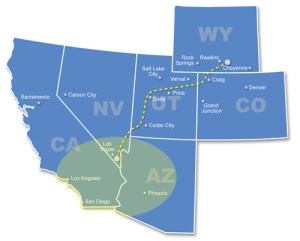
Late last week, federal agencies announced the long-awaited arrival of the Draft Environmental Impact Statement for the TransWest Express Transmission Project — a major multi-state transmission  project aimed at increasing grid integrity and  renewable energy integration in Wyoming and the Southwest.

Co-authored by the Bureau of Land Management (BLM) and Western Area Power Administration (Western), the draft EIS represents the culmination of several years of environmental analyses, public comments, and inter-agency planning. Once completed, the project is expected to transmit about 3,000 MW (enough to power almost 1 million homes), cost about $3 billion, and stretch 725 miles through Wyoming, Colorado, Utah, and Nevada. From now through September, BLM and Western will hold stakeholder meetings throughout the project area, and solicit comments or suggestions to include in the final EIS prior to beginning the year-long construction process sometime in 2014.

TransWest Map

Although the final project path will not be determined until the completion of the EIS process, the dotted line represents the current proposed route for the TransWest project.

A main project objective is to connect Wyoming’s wind energy resources — such as the 1,000 turbine Chokecherry and Sierra Madre Wind Energy Project currently under construction — to Las Vegas and Southern California energy consumers. In addition, proponents point out that having the extra grid capacity will alleviate congestion constraints all across the West’s transmission system. However, environmentalists are concerned that the proposed route would run right through important habitats for the sage grouse in Wyoming and Utah, and the desert tortoise in Nevada. To be sure, although the TransWest project is ambitious in both its size, capacity, and jurisdictional cross-over,  most of the planning process has been devoted to the kinds of environmental analyses and alternatives considerations that would address these wildlife concerns. 

Time will tell when construction will  commence, and what the ultimate transmission route will look like, but one thing is clear, with the Draft EIS out of the way, TransWest cleared its most significant and cumbersome hurdle.

For more info:

U.S. Department of the Interior, Bureau of Land Management, TransWest Express Transmission Line Project, http://www.blm.gov/wy/st/en/info/NEPA/documents/hdd/transwest.html

The Winderness Society, TransWest Express Transmission, wilderness.org/article/transwest-express-transmission

http://www.transwestexpress.net/